

Choosing the right way to heat our homes is a big decision. It affects our comfort, our wallets, and even the planet. We’ve looked at a bunch of different home heating solutions, from the old standbys to some newer ideas. Let’s break down what works and what might not be the best fit for everyone.
Key Takeaways
- Traditional systems like furnaces and boilers are well-known and provide dependable heat, though they often heat the whole house at once.
- Modern options such as heat pumps and electric baseboard heaters offer more control over different areas of your home and can be more energy-smart.
- Cutting-edge choices like geothermal systems and ductless mini-splits provide efficient, often eco-friendly heating and cooling with flexibility in how they work.
Exploring Traditional Home Heating Solutions
When we think about heating our homes, especially in older houses, a couple of systems often come to mind first. These are the tried-and-true methods that have kept families warm for generations. We’re talking about furnaces and boilers, the workhorses of home comfort.
Furnaces: A Reliable Choice
Furnaces are probably the most common heating system we see in many homes. They work by heating air and then distributing that warm air throughout the house using a system of ducts and vents. Most furnaces today run on natural gas, but some can use propane, oil, or even electricity. The process is pretty straightforward: fuel is burned to heat up a heat exchanger, and then a blower fan pushes air across that hot exchanger and out into your rooms. It’s a system many of us grew up with, and for good reason – they’re generally dependable and can heat a home quickly.
Here’s a quick look at how they typically operate:
- Thermostat Signals: When the temperature drops below your set point, the thermostat tells the furnace to turn on.
- Ignition: The furnace ignites its fuel source (like a pilot light or an electronic igniter).
- Heat Exchange: The fuel heats up a metal component called a heat exchanger.
- Blower Activation: A fan starts pushing air through the furnace and over the hot heat exchanger.
- Distribution: The warmed air travels through your home’s ductwork and out of the vents.
- Cycle Repeats: The furnace continues this cycle until the thermostat indicates the desired temperature has been reached.
Boilers: Consistent Warmth
Boilers take a different approach. Instead of heating air, they heat water. This hot water is then circulated through pipes to radiators or baseboard heaters located in different rooms. Boilers can also use natural gas, propane, or oil. The warmth from the radiators then radiates into the room, providing a steady, even heat. Many people find this type of heat to be less drying than forced air from a furnace. It’s a gentle kind of warmth that can feel quite cozy.
Boilers offer a different kind of comfort, often described as more consistent:
- Water Heating: The boiler heats water using a fuel source.
- Circulation: A pump moves the hot water through a network of pipes.
- Heat Transfer: The hot water flows into radiators or baseboard units, releasing heat into the room.
- Return Flow: Cooler water returns to the boiler to be reheated, completing the loop.
Both furnaces and boilers have been around for a long time because they do a good job of keeping us warm. They are robust systems that, with proper maintenance, can last for many years. Understanding how they work helps us appreciate their role in our homes.
While these systems are familiar, they do have their own set of pros and cons regarding efficiency, installation costs, and maintenance, which we’ll touch on later.
Modern Alternatives for Home Heating
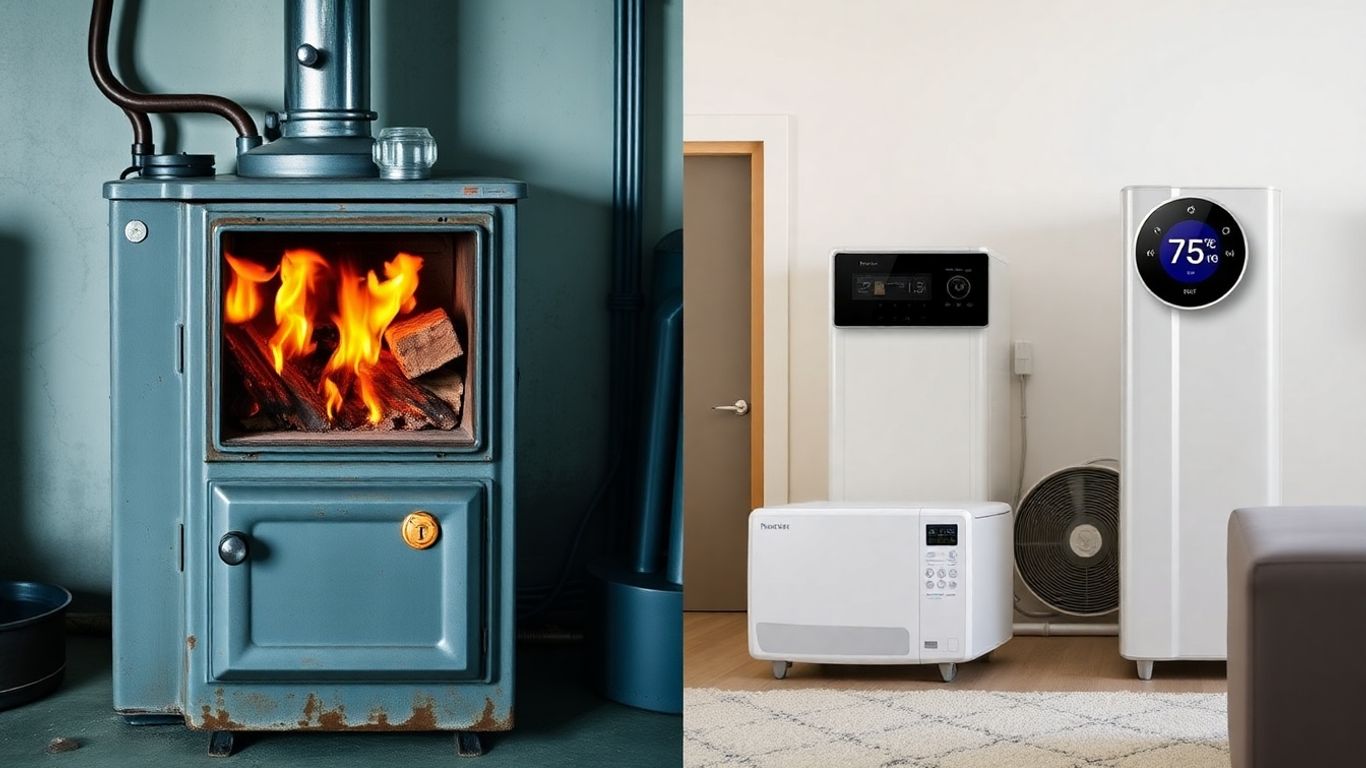
When we think about heating our homes, we often picture the old reliable furnace or boiler. But there’s a whole world of newer options out there that are changing how we stay warm, often with a focus on saving energy and giving us more control. We’ve been looking into some of these modern heating systems, and they’re pretty interesting.
Heat Pumps: Energy Efficiency
Heat pumps are a bit like air conditioners, but they can work in reverse. Instead of just cooling your house, they can also pull heat from the outside air, even when it’s cold, and bring it inside. This makes them really good at saving energy because they’re moving heat rather than creating it from scratch. They use electricity, but they use much less of it compared to electric resistance heaters. We’ve seen that in colder climates, their efficiency can drop, but newer models are getting better at handling those really low temperatures. They can also provide air conditioning in the summer, which is a nice bonus.
Electric Baseboard Heaters: Zone Control
Electric baseboard heaters are a simpler option, and they’re great if you want to control the temperature in individual rooms. Each heater has its own thermostat, so you can set different temperatures for different parts of your house. This means you don’t have to heat up rooms that aren’t being used, which can save on your electricity bill. They’re pretty easy to install, often just needing a standard electrical connection. However, they do use electricity to create heat directly, which can be more expensive to run than other systems, especially in larger homes or areas with high electricity costs. They’re a good choice for smaller spaces or as a supplement to another heating system.
We’ve found that the biggest advantage of these modern systems is often the potential for better energy use and more personalized comfort. It’s not just about turning up the heat; it’s about doing it smarter.
Here’s a quick look at how they compare:
| Feature | Heat Pump | Electric Baseboard Heater |
|---|---|---|
| Primary Function | Heating & Cooling | Heating Only |
| Energy Use | Very Efficient (moves heat) | Less Efficient (creates heat) |
| Installation | More Complex (requires outdoor unit) | Simple (wall-mounted) |
| Zone Control | Possible with multiple units/thermostats | Excellent (individual room control) |
| Cost to Run | Generally Lower | Can be Higher (depending on electricity rates) |
Innovative Home Heating Solutions
We’re always looking for ways to heat our homes smarter, right? Well, there are some pretty neat options out there that go beyond the usual furnace or boiler. These newer systems often focus on using less energy or giving us more control over our comfort. Let’s take a look at a couple of these.
Geothermal Systems: Sustainable Comfort
Geothermal heating and cooling systems are kind of a big deal when it comes to being kind to the planet and your wallet over the long haul. They work by tapping into the stable temperature of the earth, usually just a few feet below the surface. In the winter, the system pulls heat from the ground and transfers it into your house. Come summer, it reverses the process, moving heat from your house back into the earth. This makes them incredibly efficient because the ground temperature stays pretty consistent year-round, unlike the air temperature which swings wildly.
Here’s a quick rundown of how they generally work:
- Ground Loop Installation: This involves burying pipes deep underground. The type of loop (horizontal or vertical) depends on your property size and soil conditions.
- Heat Pump Unit: Inside your home, a special heat pump exchanges heat with the fluid circulating in the ground loops.
- Distribution System: The heat is then distributed throughout your home, typically via ductwork, just like a traditional forced-air system.
While the upfront cost can be higher than other systems, the energy savings over 20-25 years can really add up. Plus, many geothermal systems provide cooling too, so it’s a two-in-one deal.
Ductless Mini-Splits: Flexible Heating
Ductless mini-split systems, also known as ductless heat pumps, are another interesting option, especially if you don’t have existing ductwork or want to heat/cool specific zones in your house. They consist of an outdoor unit and one or more indoor air-handling units, connected by a conduit that houses refrigerant lines, power cables, and a condensate drain. The ‘mini’ part refers to the smaller size of the indoor units, which are usually mounted high on a wall or in the ceiling.
What’s great about these is their flexibility:
- Zoning Capabilities: You can set different temperatures for different rooms or zones, only heating or cooling the areas you’re actually using. This can save a lot of energy.
- Easy Installation: Since they don’t require extensive ductwork, installation is generally quicker and less disruptive than with central systems.
- Both Heating and Cooling: Most mini-splits can provide both heating and cooling, making them a versatile solution.
They’re becoming more popular for additions, older homes, or even as a primary heating source in milder climates. We’ve found them to be a really practical choice for adding comfort where it’s needed most.
When considering these innovative systems, it’s important to think about your specific home’s layout, your climate, and your budget. While they might have a higher initial investment, the long-term benefits in energy savings and comfort can be quite significant. Getting quotes from qualified installers is a good next step to see if they fit your situation.
So, What’s the Best Way to Heat Your Home?
Well, after looking at all the different ways we can heat our houses, it’s pretty clear there’s no single answer that works for everyone. What’s good for one person might not be so good for another, depending on where you live, how much money you have to spend, and what you care about most, like the environment or just keeping the bills low. We’ve seen how some systems are cheaper to put in but cost more to run, while others are the opposite. Some are really good for the planet, and some just get the job done with less fuss. The main thing is to think about what matters to you and your family. Do some homework, maybe talk to a few different installers, and pick the system that fits your life best. It’s a big decision, but knowing the options makes it a lot easier to make the right choice for your home.
Frequently Asked Questions
Which heating system is the cheapest to run?
Generally, systems that use natural gas, like furnaces, tend to be less expensive to operate than electric heaters. Heat pumps can also be very cost-effective because they move heat rather than creating it, using less energy. However, the actual cost depends a lot on local energy prices and how well your home is insulated.
What’s the difference between a furnace and a boiler?
We often get asked this! A furnace heats air and blows it through ducts to warm your house. Think of it like a giant hairdryer for your whole home. A boiler, on the other hand, heats water. This hot water then travels through pipes to radiators or baseboard heaters, which release the warmth into your rooms. Boilers provide a different kind of heat, often described as more even and less dry.
Are heat pumps good for really cold places?
Modern heat pumps have gotten much better and can work well even in colder climates. They work by pulling heat from the outside air, even when it’s chilly. For extremely cold areas, we sometimes see them paired with a backup heating system, like electric heat strips or even a small furnace, to make sure your home stays toasty when the temperature really drops.


