

As winter approaches, we want to make sure our heating systems are ready for the cold. Taking some time now to check things over can save us a lot of trouble later. We’ll go through some simple steps for hvac winter maintenance that anyone can do. This way, we can keep our homes warm and our systems running smoothly without unexpected issues.
Key Takeaways
- Regularly changing air filters helps the system work better and last longer.
- Adjusting thermostat settings can save energy and money during colder months.
- Keeping outdoor units clear of snow and ice prevents damage and blockages.
Essential Hvac Winter Maintenance Checks
Before the really cold weather hits, we should take a look at a couple of things to keep our heating systems running right. It’s not too complicated, and a little bit of attention now can save us from bigger headaches later.
Inspect And Clean Air Filters
This is probably the easiest thing we can do. A dirty air filter makes your furnace work harder than it needs to, which uses more energy and can even cause damage. Think of it like trying to breathe through a thick blanket – not easy!
- Check the filter at least once a month.
- Note the color of the filter. If it’s covered in dust and grime, it’s time for a change.
- Filters come in different sizes, so make sure you get the right one for your system. You can usually find the size printed on the side of the old filter.
We recommend having a few spare filters on hand so you can swap them out quickly when needed. It’s a small step, but it makes a big difference in air quality and how well your system performs.
Check Thermostat Settings For Efficiency
Our thermostat is the brain of our heating system, and making sure it’s set up right can save us some money on our energy bills. We don’t want to be heating an empty house, right?
- Consider a programmable or smart thermostat. These allow us to set different temperatures for different times of the day, like lowering the heat when we’re asleep or away.
- Avoid constantly adjusting the thermostat. Setting it to a comfortable temperature and letting it do its job is usually more efficient than fiddling with it all the time.
- Make sure the thermostat is not located near a heat source, like a lamp or a sunny window, as this can give it false readings and make your system run unnecessarily.
We often forget that our thermostat is a key player in how our HVAC system operates. A few simple adjustments can lead to noticeable savings and a more comfortable home environment throughout the winter months. It’s about working smarter, not harder, with the equipment we already have.
Taking these simple steps can help keep our heating systems in good shape and prevent unexpected issues when we need them most.
Protecting Your Hvac System From Cold Weather
Winter’s chill can be tough on your heating system. We need to take some steps to make sure it stays in good shape when the temperatures drop.
Ensure Proper Insulation Around Hvac Components
Think about all the pipes and ducts that run through your home, especially in unheated areas like basements, crawl spaces, or attics. These parts can freeze up if they aren’t protected. Frozen pipes can burst, causing a real mess and costing a lot to fix. We should check these areas and add insulation where it’s needed. Foam pipe sleeves are pretty easy to put on, and they make a big difference.
- Check exposed pipes and ducts for any gaps in insulation.
- Use foam pipe insulation sleeves for any pipes running through cold zones.
- Consider wrapping larger ducts with insulation blankets.
We want to keep the warm air flowing freely and prevent any water inside the system from freezing solid. It’s a simple step that saves a lot of headaches later.
Clear Debris From Outdoor Units
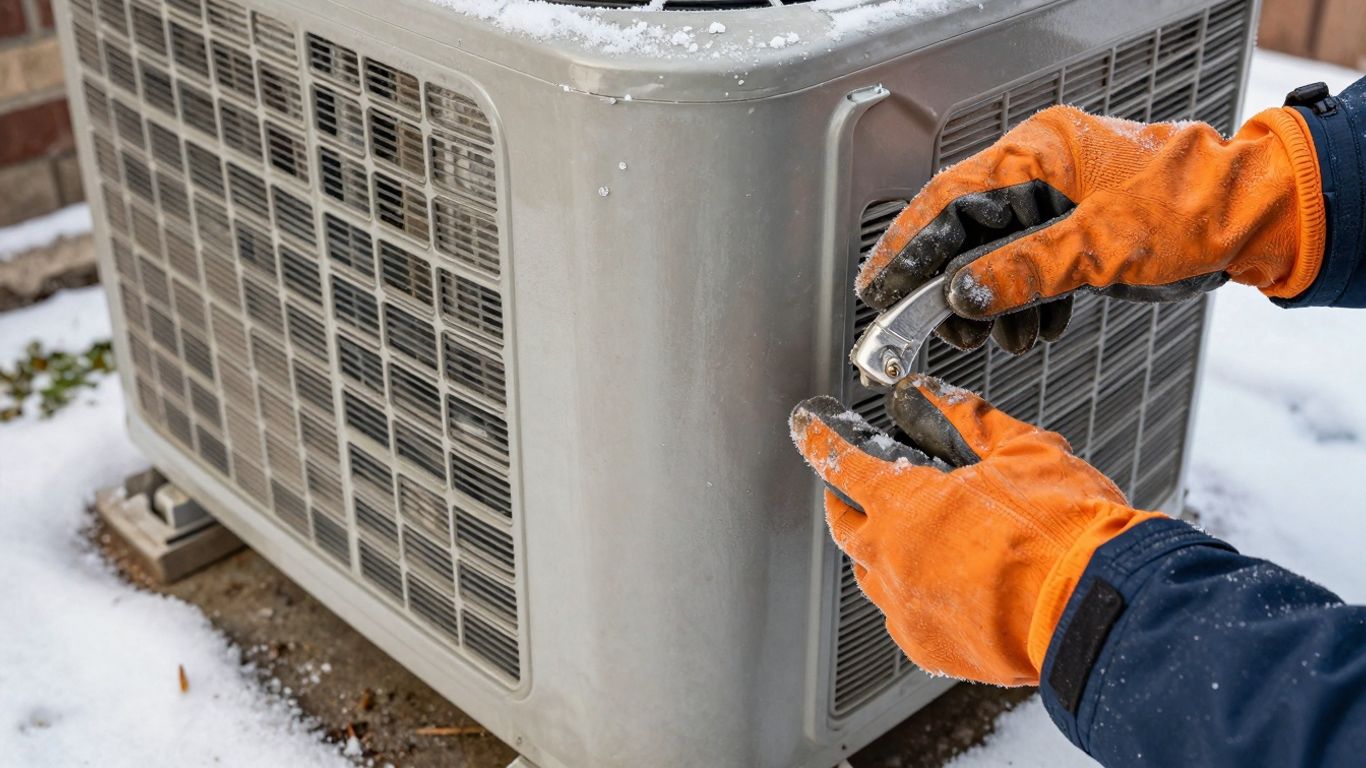
If you have a heat pump or an air conditioner that stays outside, we need to give it some attention before winter really sets in. Snow, ice, and fallen leaves can pile up around these units. This blockage can stop the unit from working right and even damage it.
- Gently remove any leaves, branches, or other debris from the base and sides of the outdoor unit.
- Make sure snow isn’t building up too high around the unit. If it looks like a lot of snow is coming, you might want to put a temporary cover over the top, but be careful not to block the vents.
- Trim back any bushes or branches that are too close to the unit. We need good airflow around it.
Keeping the outdoor unit clear is important for its efficiency and longevity. We don’t want ice or snow getting into the fan or other moving parts. A little bit of clearing now can prevent a big repair bill down the road.
Wrapping Up: Keeping Your System Ready
So, we’ve gone over a few ways to help keep your heating and cooling system in good shape as the cold weather hits. Taking these steps now can really make a difference later on. It’s not about being a pro; it’s just about giving your system a little attention before it has to work its hardest. Think of it as a small bit of effort for a lot less worry when the temperature really drops. We hope these tips help you stay comfortable and avoid unexpected issues this winter.
Frequently Asked Questions
How often should we change our air filters?
We recommend checking your air filters every month. If they look dirty, it’s time to swap them out. For most homes, changing them every three months is a good rule of thumb, but this can change based on how much you use your system and if you have pets.
What’s the best way to keep our outdoor unit safe in winter?
It’s important to make sure the area around your outdoor HVAC unit is clear. We suggest removing any fallen leaves, branches, or snow that might have piled up. This helps the unit breathe easily and prevents damage from ice or heavy snow.
Can we do anything to help our heating system run better when it’s cold?
Absolutely! Making sure your home is well-insulated, especially around pipes and your main HVAC equipment, is a big help. Also, double-checking that your thermostat is set to save energy when you’re away or asleep can make a significant difference in how hard your system has to work.


