

We’ve all been there. It’s the middle of summer, the heat is just brutal, and suddenly, your air conditioner decides to stop working. It’s a real bummer, right? Before you panic and call a professional, there are actually a few simple things you can check yourself. We put together some ac troubleshooting tips to help you figure out what’s going on. Sometimes, the fix is easier than you think, and you can save yourself some money.
Key Takeaways
- Always start with the basics: check your thermostat and your home’s electrical panel first.
- A lot of AC problems come from dirty filters or stuff blocking the outdoor unit, so those are good places to look.
- Even if you can’t fix it yourself, knowing these simple checks can help you explain things better to a technician if you end up needing one.
Addressing Common AC Power Problems
Checking Your Thermostat Settings
Okay, so the first thing we should all do when the AC isn’t working is check the thermostat. It sounds super obvious, but you’d be surprised how often this is the culprit. Make sure it’s actually set to "cool" and not just "fan only." Also, double-check the temperature setting. Someone might have accidentally bumped it up, especially if you have kids around.
- Verify the mode is set to "Cool".
- Ensure the set temperature is lower than the current room temperature.
- Check the batteries if it’s a digital thermostat.
Sometimes, the thermostat itself can be faulty. If you’ve checked everything else and it still isn’t working, it might be worth testing the thermostat with a multimeter or just replacing it altogether. They’re not usually too expensive, and it’s an easy DIY fix.
Inspecting Circuit Breakers and Fuses
If the thermostat looks good, our next stop is the circuit breaker or fuse box. This is where things can get a little more involved, but it’s still pretty straightforward. Locate the breaker that controls your AC unit. It’s usually labeled, but if not, you might have to do some trial and error. Flip the breaker to the "off" position and then back to "on". This can reset it if it’s tripped.
If you have an older home, you might have fuses instead of breakers. Look for a blown fuse – it’ll have a broken wire inside. Replace it with a new fuse of the same amperage.
Here’s a quick checklist:
- Locate the AC circuit breaker or fuse.
- Check for tripped breakers (move to the off position and then back on).
- Inspect fuses for breaks and replace if necessary.
| Issue | Possible Solution |
|---|---|
| Tripped Breaker | Reset the breaker. |
| Blown Fuse | Replace the fuse with the correct amperage fuse. |
Resolving Airflow and Cooling Issues
Cleaning or Replacing Air Filters
Okay, so your AC isn’t blowing cold air like it used to? The first thing we should check, and I mean always the first thing, is the air filter. Seriously, a dirty air filter is the culprit way more often than you’d think. It’s like the AC’s version of a clogged artery.
A dirty filter restricts airflow, making your AC work harder and less efficiently.
Here’s a quick rundown:
- Locate the air filter. It’s usually in a wall or ceiling vent, or inside the AC unit itself.
- Take out the old filter. Prepare to be disgusted – they can get pretty gross.
- Check the filter size. It’s printed on the side of the old filter. Make sure you get the right replacement.
- Put in the new filter. Make sure the arrow on the filter points in the direction of airflow.
Changing your air filter regularly is one of the easiest and cheapest ways to keep your AC running smoothly. We try to change ours every month, but at least every three months is a good rule of thumb. If you have pets or allergies, you might need to change it more often.
Clearing Blockages Around the Outdoor Unit
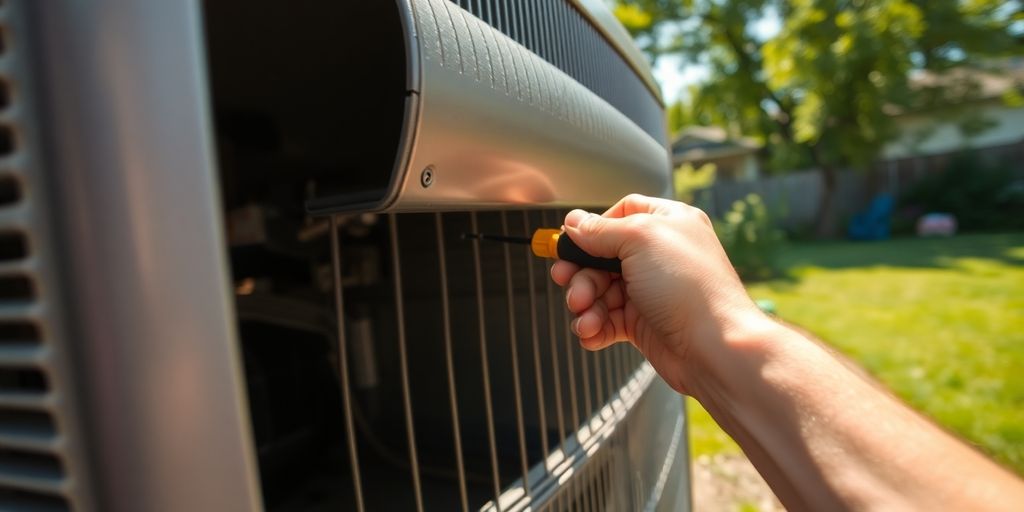
Alright, so you’ve changed the air filter, and your AC is still acting up? Let’s head outside and take a look at the outdoor unit, also known as the condenser. This thing needs to breathe to do its job properly. If it’s surrounded by bushes, leaves, or other debris, it’s not going to work very well.
Here’s what we need to do:
- Clear away any plants or debris within at least two feet of the unit. We’re talking bushes, weeds, leaves, anything that could block airflow.
- Check for any bent fins on the unit. These are the thin metal pieces that surround the unit. If they’re bent, you can gently straighten them with a fin comb (you can find these at most hardware stores).
- Make sure the fan is clear of any obstructions. The fan is what helps to dissipate heat, so it needs to be able to spin freely.
| Issue | Solution the first step is to ensure the unit is clean and free of obstructions. Regular maintenance is key to preventing issues.
Wrapping Things Up
So, we’ve gone over some common AC problems and how you might be able to fix them yourself. It’s pretty cool when you can get your AC working again without calling someone, right? But hey, if things get too tricky, or you’re just not sure, it’s always smart to get a pro involved. Sometimes, a small fix can turn into a bigger headache if you’re not careful. We hope this guide helps you keep your cool, literally, and saves you a bit of money too. Stay comfortable out there!
Frequently Asked Questions
Why isn’t our AC blowing cold air?
When your AC isn’t blowing cold air, it could be a few things. First, check your thermostat to make sure it’s set to ‘cool’ and the temperature is lower than the room’s current temperature. If that’s not it, the air filter might be super dirty and blocking the airflow. A really common reason is also low refrigerant, which is the stuff that makes your AC cool. Sometimes, the outside unit might be really dusty or have stuff blocking it, which stops it from working right. We recommend checking these simple things first before calling a pro.
What causes our AC to turn on and off frequently?
If your AC keeps turning on and off really fast, we call that ‘short cycling.’ This can happen for a bunch of reasons. It might be that your AC unit is too big for your house, so it cools things down too quickly and then shuts off. Or, the air filter could be clogged, making it hard for air to move through. Sometimes, there’s not enough refrigerant, or the coils are frozen. It’s also possible that the thermostat isn’t working right and is telling the AC to turn on and off too much. We should look into these possibilities.
What do different strange noises from our AC mean?
Strange noises from your AC can definitely be a sign something’s wrong. A loud bang or clunk could mean something’s loose inside. Hissing sounds often point to a leak of refrigerant. If you hear a grinding or squealing noise, it might be a problem with the motor’s bearings. A bubbling sound could mean there’s air in the refrigerant line or a clog. We suggest paying attention to what kind of noise it is, as it can help figure out the problem. If it’s a new or really loud noise, it’s best to have it checked out.


